
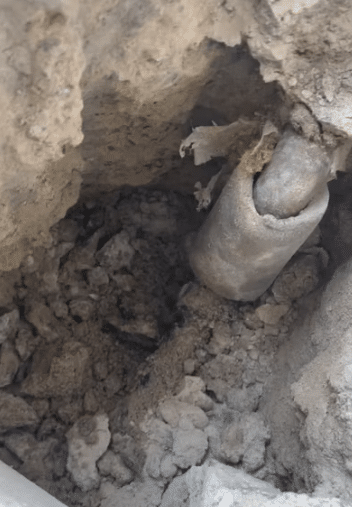
We were called in a customer in Comber who was having a problem with damp rising up the wall in their living room. We were able to discover the cause under the floor and fix the issue.
Below is a number of causes of damp and how to repair it –
Dampness in a home wall can be caused by a variety of factors, including:
- Poor ventilation: If a room is poorly ventilated, moisture can build up and cause dampness.
- Plumbing leaks: Leaking pipes, taps, or water tanks can cause dampness.
- Condensation: Condensation can occur when warm, moist air meets a cold surface like a wall or window.
- Rainwater penetration: If the external walls are not properly waterproofed, rainwater can penetrate and cause dampness.
- Rising damp: Rising damp occurs when groundwater rises through porous building materials, like brick or stone, and enters the wall.
Here are some ways to fix dampness in a home wall:
- Improve ventilation: Ensuring that there is good airflow in the room can help to reduce moisture build-up. Opening windows, installing vents or fans, and using a dehumidifier can all help to improve ventilation.
- Fix leaks: Any leaks should be repaired as soon as possible to prevent further damage.
- Address condensation: Condensation can be reduced by using extractor fans in kitchens and bathrooms, opening windows, and using a dehumidifier.
- Waterproof external walls: If the external walls are not waterproofed, this should be done to prevent rainwater penetration.
- Treat rising damp: If rising damp is the cause of dampness in the wall, it may be necessary to install a damp-proof course, which involves injecting a damp-proof barrier into the wall.
It’s important to identify the cause of dampness in the wall before attempting to fix it, as different causes require different solutions. If you’re unsure about the cause or how to fix it, it’s best to contact our team at B Keenan P&H.